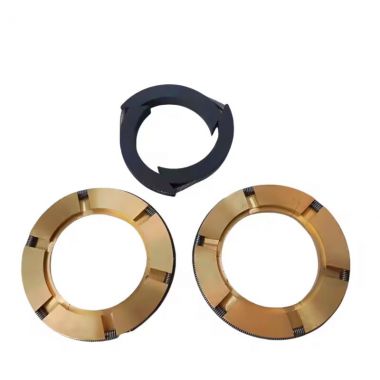


Description: The oil scraper ring is installed on the outer side of the stuffing box, on the crankcase side, and hugs the reciprocating piston rod; it is a critical safety seal in a hydrogen compressor.
1. Scraping oil from the piston rod: On the return stroke the ring scrapes crankcase oil off the rod surface, preventing it from entering the cylinder and the hydrogen medium side.
2. Preventing hydrogen contamination: Stops grease or oil from mixing into high-purity hydrogen, safeguarding hydrogen product purity.
3. Safety and explosion protection: Prevents oil from entering the high-pressure hydrogen chamber and eliminates the risk of an oil-gas mixture exploding under high temperature and pressure.
4. Returning recovered oil: The scraped oil flows back to the crankcase through the return groove in the ring body, reducing oil consumption.
5. Auxiliary dust protection: Blocks small amounts of dust from the medium side from migrating back into the transmission lubrication chamber, protecting the transmission parts.
The ring is a split, open-ended circular ring that grips the piston rod by means of a clamping spring and scrapes oil through reciprocating motion.
1. Tin bronze/lead bronze: The most commonly used material in industrial hydrogen compressors; wear-resistant, self-lubricating, and not prone to damaging the piston rod; suitable for oil-lubricated models and highly cost-effective.
2. Filled PTFE: Specific to high-purity, oil-free hydrogen compressors; low friction, does not scratch the piston rod, and resists hydrogen permeation; suitable for high-pressure, high-purity hydrogen, but with a shorter wear life than bronze parts.
3. Spring material: 304/316L stainless steel

 Contact Us