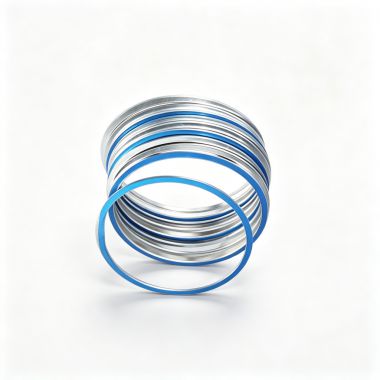


Description: The first-stage gas valve gasket of a natural gas compressor is a static-sealing wear-prone part. It is installed between the first-stage cylinder gas valve and the valve seat, on the flange mating surface of the valve cavity; it is used in natural gas compression conditions to seal and isolate the gas valve.
It fills the gap between the mating surfaces of the gas valve assembly, seals the gas in the first-stage cylinder, prevents natural gas from leaking outward, and avoids interstage gas leakage.
It buffers the clamping stress of gas valve assembly and compensates for machining deviations of the mating surface and thermal expansion and contraction during operation.
It protects the metal sealing surfaces of the valve and valve seat from direct erosion by the high-pressure gas flow.
Sheet-shaped sealing gasket, shaped to match the flange profile of the first-stage gas valve; flexible graphite gaskets and metal composite gaskets are commonly used in natural gas compression conditions, being resistant to high pressure, oil and gas, and high temperature; positioning holes are reserved, and the gasket is clamped at the joint between the gas valve and the cylinder valve cavity.

 Contact Us