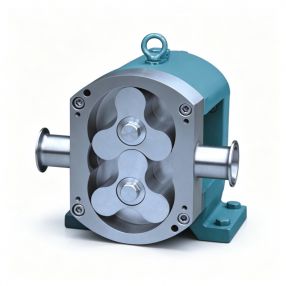
Cam Rotor Pump Cam
A cam rotor pump (also known as a cam pump or a two-lobe/three-lobe rotor pump) has a pair of rotors driven by an external timing gear to rotate synchronously in opposite directions. Under normal conditions the rotors do not touch each other, and a small clearance is maintained between the rotors and the pump casing or liner, the medium being conveyed by the change in volume. Rotors fall into two main types: integral metal rotors and rubber-coated rotors. They are the core flow-through component and an important wear-prone part.
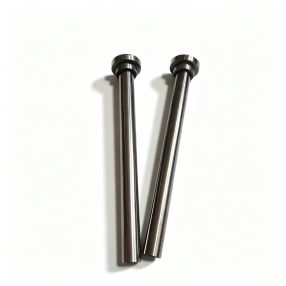
Plunger Pump Plunger
It applies to reciprocating plunger pumps and high-pressure metering plunger pumps. The plunger is the core working part of the reciprocating motion, moving linearly to and fro inside the packing/sealing gland and forming a friction pair with the packing seal; it is a key wear-prone part. Diaphragm metering pumps have no plunger and rely on diaphragm transmission.
Plunger Pump Check Valve
A plunger pump has check valves at both the inlet and the outlet (suction valve and discharge valve), which are core wear-prone parts; the reciprocating plunger completes suction and discharge through the alternating opening and closing of the two valve sets. Diaphragm metering pumps and high-pressure reciprocating plunger pumps both use this arrangement. A check valve is generally supplied as a set: valve seat, valve plate or valve core, spring, and valve seal ring.
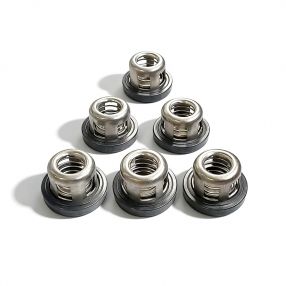
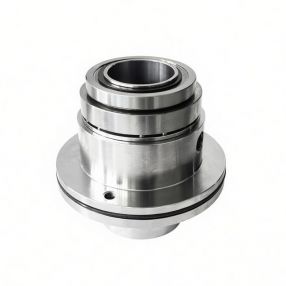
Mechanical Seal (DMS)
Mechanical seals are precision, structurally complex basic mechanical components and are key parts of various pumps, reaction and synthesis vessels, turbo compressors, submersible motors, and other equipment.
Diaphragm
Made of metal, with good sealing performance, wear resistance, and weather resistance.
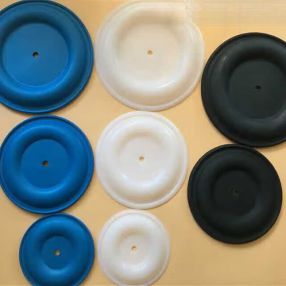
The diaphragm is the core working component of a pneumatic/electric diaphragm pump. It completely isolates the driving medium chamber (compressed air or hydraulic oil) from the conveyed material chamber. Reciprocating flexural deformation changes the volume, completing medium suction and discharge and eliminating cross-leakage between the material and the driving-side medium.
Pump Casing Gasket
The pump casing gasket is a static sealing element between the pump body and the pump cover. Clamped at the pump-casing flange face, it prevents the conveyed medium from leaking outward at the casing joint and stops air from entering the pump body during negative-pressure operation.
Pump O-Rings
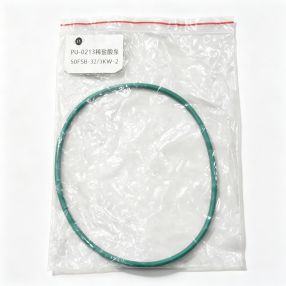
O-rings are static and dynamic seal consumables for pumps, widely used at pump covers, impeller nuts, mechanical seals, flanges, and similar locations to prevent medium leakage or air ingress.