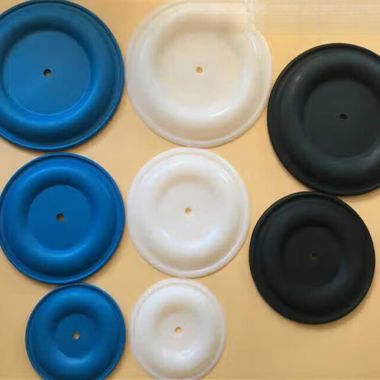
Description: The diaphragm is the core working component of a pneumatic/electric diaphragm pump. It completely isolates the driving medium chamber (compressed air or hydraulic oil) from the conveyed material chamber. Reciprocating flexural deformation changes the volume, completing medium suction and discharge and eliminating cross-leakage between the material and the driving-side medium.
1. Nitrile butadiene rubber (NBR): oil-resistant and abrasion-resistant; not resistant to ketones, esters, and strong oxidants; suitable for general oil and wastewater applications.
2. Chloroprene rubber (CR): moderately corrosion resistant and anti-aging; used in general chemical and slurry applications.
3. EPDM: Resistant to acids, alkalis, and hot water; not resistant to mineral oil, suitable for acidic aqueous solutions.
4. Fluororubber FKM/Viton: Resistant to strong acids, alkalis, organic solvents, and high temperatures; high cost.
5. Teflon PTFE (polytetrafluoroethylene): Extremely resistant to chemical attack and able to withstand almost all chemicals; it is rigid and has poor resistance to bending fatigue, and is therefore often used in combination with a rubber backing.
6. Composite diaphragm: PTFE + rubber lining: the PTFE contacts the material while the rubber provides elastic flexing, combining corrosion protection with fatigue resistance; this is the most common type in industry.
1. By drive type: Pneumatic diaphragm pump diaphragm, electric diaphragm pump diaphragm.
2. By structure: Single-layer rubber diaphragm, single-layer PTFE diaphragm, composite diaphragm (PTFE + rubber backing), and fabric-reinforced diaphragm (fibre cloth laminated inside to increase strength).
3. By shape: Disc-type diaphragm (mainstream), square diaphragm; by mounting hole pattern: bolt-clamped type and clamp type.
4. By function: Main working diaphragm, fault alarm diaphragm (double-layer diaphragm with a detectable interlayer leak).
1. Diaphragm cracking and tearing
2. Surface bulging, blistering, and swelling
3. Localized perforation and pitting corrosion
4. Permanent deformation, wrinkles, and reduced resilience
5. Material cross-over between the material side and the drive side (diaphragm failure, mutual cross-over of media, decreased pump flow, unstable pressure)
1. Chemical corrosion/swelling: The material is incompatible with the conveyed medium; rubber swells under solvents, and PTFE is attacked by strongly alkaline high-temperature media. This is the most common failure mode.
2. Fatigue bending fracture: Under high-frequency reciprocating motion and long-term repeated flexing, the rounded root of the diaphragm is the most prone to fatigue cracking; pump speed or stroke exceeding the allowable value for the diaphragm accelerates the damage.
3. Mechanical damage: The medium contains hard particulate impurities that scour and abrade the diaphragm surface; welding slag and particles drawn in at the inlet cause local punctures.
4. Pressure shock and dry running: When the pump runs dry there is no medium to cool and lubricate it, and the diaphragm ages rapidly through dry reciprocating friction and heat; blocked inlet or outlet pressure and water hammer cause instantaneous overpressure and tearing.
5. Temperature exceeding limits: The medium temperature exceeds the material's allowable range, causing rubber to harden and crack, and PTFE to creep and deform.
6. Installation issues: Uneven tightening torque on the bolts or a misaligned diaphragm produces localized stress concentration in operation and tearing within a short time.
7. Abnormal back pressure: A blocked outlet or excessive back pressure subjects the diaphragm to a pressure differential beyond the design value, causing it to burst.
When selecting, first verify the medium composition, temperature, and particle content; composite diaphragms are preferred for highly corrosive service; prolonged dry running of the pump is prohibited; regularly check the interlayer leak signal (double-layer diaphragm design) and tighten the bolts evenly to the specified torque.



 Contact Us