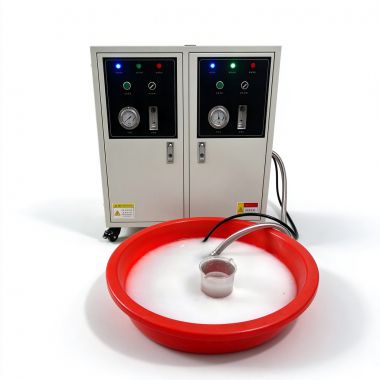
Description: Core component of water-bath bubble-washing systems. Used together with blowers or Roots blowers and mounted at the bottom of soaking water tanks. Compressed air is sheared and dispersed by this unit to generate massive fine bubbles. Rising bubbles agitate water; combined with drum tumbling motion, material washing is achieved.
Materials.
304 stainless-steel: Food-industry mainstream grade, resistant to weak-acid fruit-vegetable media and water-vapor corrosion.
Plate thickness generally 0–3.0mm for welded construction; aeration tubes or strips adopt 304 stainless-steel. 316L stainless-steel: Applied for high-salt and high-organic-acid materials (tomatoes.
Berries etc.) with enhanced pitting-corrosion resistance. Plastic type (PP/PVC): Low-cost, mainly for small-scale simple equipment.
Not resistant to high-temperature and strong acid-alkali; seldom used long-term in large-scale food processing plants.
Aeration elements: Microporous-type uses food-grade EPDM rubber microporous membrane; orifice-open type uses stainless-steel perforated tubes.
Categories By structural form. Drilled aeration-tube type (tubular bubble generator): Numerous small orifices are drilled on steel-pipe sidewalls.
Compressed air jets from orifices produce bubbles. Simple construction, good anti-clogging performance; most common for immersion-drum washing machines.
Microporous aeration strips or discs: Manufactured from EPDM microporous rubber generating fine bubbles for strong water-agitation.
Drawback: easily clogged by sludge, sand and residues. Rotary shear-type bubble generator: Internal flow-guide channels shear rotating airflow for more uniform bubbles.
Usually supplied as standalone units and seldom deployed to fill entire water tanks. By mounting method. Bottom-mounted fixed type: Welded or bolted to water tank bottom.
Standard OEM configuration. Detachable suspended type: Suspended installation, allowing hoisting out from the water tank for cleaning and maintenance.
Preferred for large-size equipment. Uses
1. Massive bubble generation: Compressed air is released through the generator to produce dense upward-surge bubbles.
Water agitation & dirt removal: Rising and bursting bubbles create impact and turbulence loosening and removing sludge.
Insect eggs and residual pesticide on material surfaces while mechanical-friction-caused material damage. Water tank water circulation: Air bubbles drive upward-downward water flow and stop silt-sand accumulation at tank-bottom dead zones.
Auxiliary soaking: Improves contact efficiency between water and materials for enhanced soaking-softening effect.
Cooperating with drum screw conveyors to raise washing efficiency. Partial auxiliary flotation: Slight gravity separation.
Certain light impurities are floated for overflow discharge. Problems and Causes of Damage Faults. Uneven air output, local zero-air zones.
Blocked air orifices; weld-joint air leakage; deformed aeration tubes; damaged or detached microporous membranes.
Corroded-broken generator supports. Causes of Damage
1. Clogging (most common): Fruit-vegetable debris and silt enter pores or micropores and accumulate to block air outlets.
This issue is particularly severe for microporous-rubber variants.
Corrosion: Long-term immersion in fruit-vegetable organic acid or salt water produces pitting corrosion on weld seams.
Plastic components age and crack faster under high-temperature or detergent exposure. Airflow-induced fatigue: Pulsating blower air pressure repeatedly impacts weld seams and triggers weld cracking and air leakage.
Physical impact: Hard deposits at tank bottom or mechanical impact during cleaning-maintenance deform tubes and tear orifices.
Abnormal pressure: Excessive blower pressure ruptures microporous membranes; insufficient pressure yields inadequate bubble volume.
Backflow contamination: After equipment shutdown, tank water flows backward into aeration tubes; residues accumulate inside and increase clogging risk upon restart.
Routine Maintenance
1. Per-shift inspection: Check bubble uniformity after startup; listen for abnormal noise and air leakage.
Verify normal blower pressure.
Per-shift cleaning: Drain water tank and rinse aeration-tube surfaces to remove fruit-vegetable residues; flush air orifices periodically using high-pressure water.
Anti-backflow measure: Close air-inlet valve before stopping the blower to stop sewage backflow into bubble generator and air duct.
A check valve may be fitted. Periodic disassembly inspection: For tubular generators, disassemble and inspect internal sludge accumulation every 1 to 3 months.
For microporous generators, regularly inspect diaphragms for damage or detachment and replace as needed. Weld-and-support inspection: Visually check weld seams for pitting and air leakage.
Inspect fixed supports for rust and looseness; repair welding and tightening timely. Air-source cleanliness control: Fit an air filter at blower inlet to reduce dust ingress and slow clogging.
Long-term shutdown maintenance: Drain residual water inside pipes, rinse thoroughly and keep dry. reduce prolonged immersion of microporous-rubber parts in residual acid-alkali wastewater.
Additional For immersion-drum washing machines, 304 perforated tubular aerators are preferred. They deliver superior anti-clogging performance and simpler maintenance compared with microporous-type products.
Microporous aeration provides better washing performance but demands higher-frequency maintenance and suits raw materials with low sediment content.
If the bubble generator itself shows no rotation failure malfunctions mostly originate from clogging or weld-joint leakage.
Which directly degrade washing effectiveness.



 Contact Us