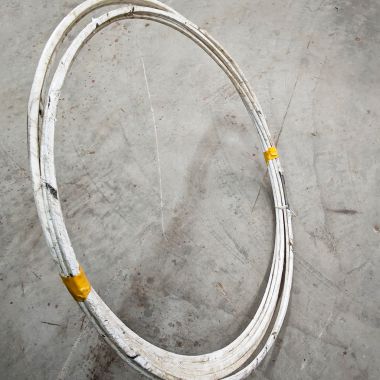


Description: Sealing gaskets are static sealing components for reactor flanges, used at the reactor lid, manhole, and flange mating surfaces to seal the reactor body. They withstand the temperature, pressure, and sugar-solution medium of the sorbitol hydrogenation reaction, preventing material leakage, hydrogen escape, and loss of vacuum retention, thereby ensuring production safety and product cleanliness.
Fill the fine gaps in the flange sealing face to achieve vessel sealing, withstanding reaction pressure and negative-pressure (vacuum) conditions.
Resist sorbitol solution, alkaline materials, and hydrogen, preventing medium and hydrogen leakage and blocking outside air from entering the reactor.
Compensate for deformation from thermal expansion and contraction of the equipment, maintaining flange-seal reliability.
Sorbitol hydrogenation reactors commonly use PTFE gaskets, PTFE-jacketed gaskets, and expanded-PTFE gaskets. For high-pressure hydrogenation, PTFE-filled spiral-wound metal gaskets are selected. It is made from a sealing substrate, with or without a metal reinforcing core; it is non-toxic and non-contaminating, does not pollute the sugar product, and resists sugar solution and weak-alkali corrosion.

 Contact Us