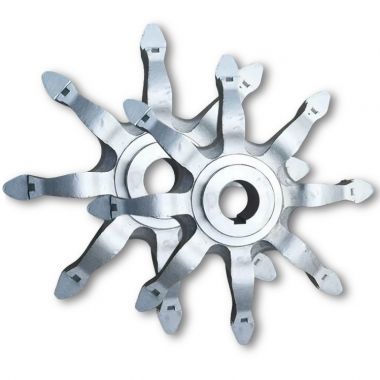


Description: The sprocket is a key transmission component of a tubular chain conveyor. Its main function is to mesh with the chain and, by rotating, drive the chain so that the material is conveyed continuously inside the closed pipe.
The sprockets of tubular chain conveyors are typically made of high-strength alloy steel or engineering plastics (such as nylon), and are precision-machined into a toothed structure to mesh with the chain plates or rollers to transmit power. Their design must meet the following technical requirements:
Tooth profile accuracy: The sprocket tooth profile must match the chain exactly to avoid impact or wear during meshing. Common profiles include straight-sided teeth and curved-sided teeth.
Material selection: The material should be chosen according to the characteristics of the conveyed material. For example, nylon sprockets are the first choice for corrosive materials because of their excellent acid and alkali resistance and self-lubricating properties, while alloy steel sprockets are required for heavy-duty or high-temperature materials.
Heat treatment: Metal sprockets require heat treatment such as quenching and carburizing to raise the surface hardness (usually HRC≥45) and extend service life.
Dynamic balancing: High-speed sprockets must be dynamically balanced to reduce vibration and noise.

 Contact Us