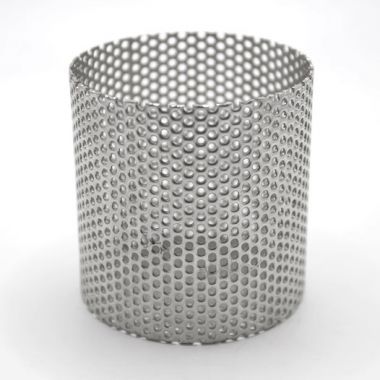


Description: Core classification consumable for modified-starch ultrafine mills, fitted inside the grinding chamber. After impact and grinding, particles of qualified size pass through the screen for discharge, while over-size coarse material remains inside the chamber for re-grinding. It controls final particle-size of finished modified-starch powder.
Stainless-steel perforated-plate screens or woven-wire screens are commonly deployed, offering wear-resistance and corrosion-resistance suitable for food-grade modified-starch production. Screen aperture size directly determines finished-product fineness. Screens are secured inside grinding chambers by clamping rings and pressure plates.
The main unit drives the grinding assembly at high-speed rotation. Material undergoes impact, shearing and grinding within the grinding chamber. Starch particles smaller than screen apertures pass through under airflow action and proceed to downstream processes. Coarse particles larger than apertures are retained and repeatedly re-ground until particle-size meets specification and passes through the screen. Finished-starch particle-size can be adjusted by exchanging screens of different aperture dimensions.
1. High-speed rubbing of starch particles wears screens over service time; enlarged apertures result in coarser finished-product particle-size.
2. Viscous modified-starch grades readily cause screen blinding and clogging and reduce production throughput.
3. High-speed impact may trigger screen cracking and perforation; Loose metallic fragments may contaminate process powder.
1. Particle-size classification & screening to control fineness of finished modified-starch powder.
2. Retain incompletely-comminuted coarse particles to guarantee finished-product quality.
3. Support multiple product-specification production by swapping screens with different aperture sizes.

 Contact Us