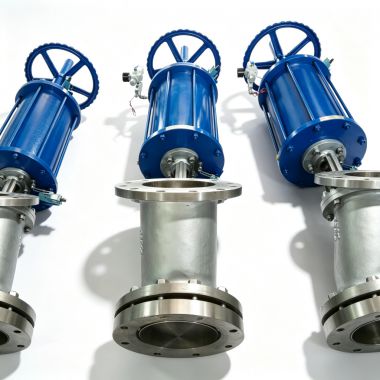


Description: The upward-discharge valve, fully named the upward-acting discharge valve and commonly called a bottom valve, is installed at the bottom of reactors and storage tanks for discharging, releasing, and sampling materials, achieving dead-corner-free discharge from the tank bottom.
Opening: The valve disc rises upward (into the vessel) and leaves the valve seat, and the material flows out;
Closing: The valve disc falls downwards and presses against the valve seat, cutting off the material.
Opening requires overcoming the medium pressure inside the vessel, so the opening torque is greater than the closing torque.
No residue: The valve disc rises and retracts into the vessel, and the vessel bottom is nearly flat, so material is unlikely to accumulate or cake; suitable for media containing particles, crystals, or high viscosity.
Reliable sealing: The sealing surface can be hardfaced with cemented carbide for wear and erosion resistance; hard-seal and soft-seal versions are available.
Drive options: Manual handwheel, pneumatic, or electric; the pneumatic version is commonly used in automated service.
Commonly used models: FL41W, FL41F; pressure PN16; size DN25-DN250; body materials 304/316L stainless steel, cast steel, or enamel.
Reactors in the chemical, pharmaceutical, dye, and food industries; suitable for paddle and turbine agitators;
Not suitable for frame or anchor agitators (the impeller would strike the upward-projecting valve disc; in such service a downward-discharge valve should be selected).

 Contact Us