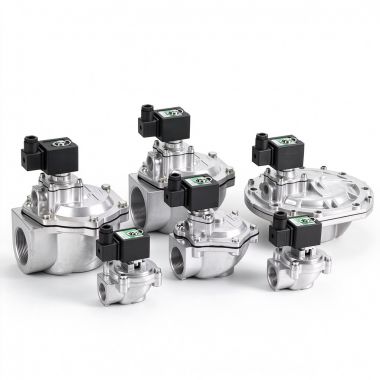


Description: The pulse solenoid valve (also called a pulse valve) is the actuator of the cleaning system of a bag filter.
Upon receiving an electrical signal from the pulse controller, the valve opens instantaneously. High‑pressure compressed air from the air tank jets into filter bags, generating shock‑waves to dislodge dust accumulated on filter‑bag surfaces. When the electrical signal ceases, the valve closes rapidly, completing one full pulse‑jet cleaning cycle.
Internal assemblies include electromagnetic pilot assembly (coil, armature, diaphragm with small pressure‑relief orifice), main diaphragm, valve body, and return spring.
Opening and closing are driven by a pressure differential across the diaphragm. The coil only triggers pressure relief; continuous high current is not required to keep the valve open.
Filled PTFE (PTFE, the most mainstream).
1. Valve body: Predominantly cast aluminum (Grade ZL104) — lightweight, good castability, resistant to corrosion from compressed‑air environments. Stainless‑steel valve bodies are adopted for a few high‑pressure or corrosive working conditions.
2. Diaphragm (core wearing part):
- Nitrile rubber (NBR) for standard compressed‑air service;
- Fluoroelastomer (FKM) for environments with oil‑water mixture or mild corrosion;
- Some composite diaphragms incorporate fabric reinforcement for improved tear resistance.
3. Pilot‑head housing: Stainless steel / engineering plastic; coil bobbin made of high‑temperature‑resistant engineering plastic.
4. Sealing elements: NBR O‑rings; replace with FKM for anti‑corrosion service.

 Contact Us