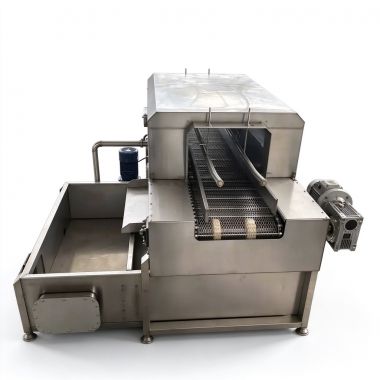
Description: Core conveying component for spray washers, transporting totes / trays sequentially across multi wash stations; open mesh geometry enables full perimeter spray washing and fast waste liquid drainage.
Carries work pieces such as turnover baskets, food trays and material bins, moving them uniformly through pre wash, main wash, rinse and air blow spray stations for fully automated continuous washing. Its open mesh structure permits spray water penetration so work piece bottom and side surfaces receive direct jet impingement, while wash water and detached residues rapidly drain down into the collection tank.
1. 304 / 316L Stainless Steel Mesh Belt: Hot water resistant up to 95 °C, compatible with common acid alkali detergents; high mechanical strength and wear resistance. Specify 316L for chloride containing detergent environments. Drawback: Higher self weight; residual humidity corrosion risk exists.
2. Food Grade PP Polypropylene Modular Belt: Light weight, acid alkali resistant and cost effective; continuous use temperature ≤60 °C; prone to thermal aging deformation under high temperature conditions.
3. Food Grade POM Polyoxymethylene Modular Belt: Low friction wear resistant detergent compatible polymer; maximum service temperature ~70 °C; suited for medium to low temperature main wash and rinse stations.
Matching accessories: Pins, retaining clips, side guard plates and anti slip stops manufactured from identical material grade complying with food contact requirements.
1. Woven Stainless Steel Mesh Belt: Wire woven construction, high open area ratio and good fluid permeability; high temperature heavy soil washing applications.
2. Plastic Modular Chain Plate Belt: Assembled from discrete polymer modules and hinge pins; enables partial component level replacement without full belt removal, the most prevalent style for food spray washing machines. Available in solid plate or open mesh variants.
3. Drive arrangement: Mesh belt actuated by drive sprockets via friction or positive tooth meshing engagement.
1. Belt Mis Tracking & Edge Wear: Uneven left right tension, sprocket mis alignment or workpiece offset loading produce progressive edge thinning and mechanical binding.
2. Hinge Pin Rupture & Clip Dislodgement: Residue wedged between modules creates mechanical stress; stainless steel pins corrode under hot detergent exposure; polymer pins fatigue fracture under repeated impact, causing belt disassembly.
3. Module / Mesh Plate Cracking: Impact damage from hard body debris; PP / POM polymer modules suffer thermal chemical embrittlement from prolonged hot detergent immersion.
4. Mesh Opening Fouling: Protein residues and vegetable debris lodge inside mesh apertures, reducing open flow area, encouraging microbial growth and increasing belt load.
5. Drive Slippage: Sprocket tooth wear increases meshing clearances; belt slips under heavy workpiece loading halting material transport.
1. Per Shift Inspection: Monitor belt travel for mis tracking, abnormal noise or binding; clear food debris trapped within mesh openings to prevent material build up.
2. Weekly Inspection: Examine hinge pins, retaining clips and mesh panels for wear / cracking; inspect drive sprocket tooth wear; adjust belt tension appropriately (avoid excessive over tensioning).
3. CIP Cleaning Guidance: Regulate acid alkali concentration and temperature during CIP sanitization; avoid extended high temperature soaking cycles for polymer belts. Drain and air dry belts post cleaning to mitigate chemical aging degradation.
4. Repair Replacement Strategy: Replace only damaged individual modules plus hinge pins for localised failure (no full belt swap out required). Complete belt replacement is necessary for widespread deformation and multiple cracking points.
5. Operating Constraints: Prevent heavy or sharp edged work pieces from dropping directly onto belt surfaces; stop work pieces from jamming between belt edge and machine frame.



 Contact Us