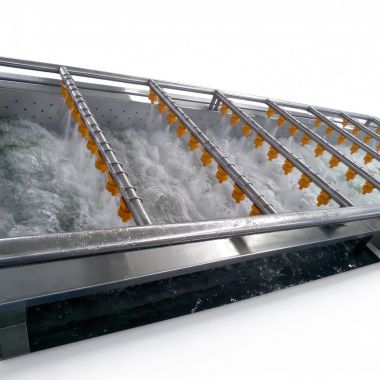


Description: Core fluid jet execution component generating targeted high energy spray patterns for continuous food container washing across multi process stations.
Pressurizes circulating wash water (RO purified water, warm water, alkaline / acidic detergent solutions) and forms defined geometry high impact jets to flush residues, grease and protein deposits off turnover baskets, totes, trays and fruit vegetable workpieces. Nozzles are configured for pre wash, main wash, intermediate rinse and final rinse stations to implement continuous inline washing.
1. 304 / 316L Stainless Steel: Dominant choice; withstands hot water service up to 80 95 °C plus acid alkali detergents with good wear resistance for heavy soil high temperature washing. Select 316L for chloride ion containing detergent conditions.
2. PP Polypropylene: Low cost acid alkali resistant, limited temperature rating ≤60 °C and poorer abrasion performance, primarily for low temperature rinse sections.
3. POM Polyoxymethylene: High hardness wear resistant detergent compatible food grade polymer, temperature limit ~70 °C; suitable for medium pressure main wash stations.
4. PVDF: Superior broad spectrum chemical resistance for hot strong detergent rinse stations, higher material cost.
Food machine nozzle construction: Tri clamp quick release or threaded snap fit geometry supporting easy disassembly cleaning and CIP sanitization.
1. Flat Fan Nozzle: Most widespread configuration; flat fan shaped high impact jet, deployed heavily on main wash stations for flushing tote outer walls and basket surfaces.
2. Full Cone Nozzle: Solid conical spray footprint with uniform impact distribution; for cavity and base flushing at pre wash stations.
3. Hollow Cone Nozzle: Annular mist pattern with lower impact force; used for spray humidification, rinsing and chemical solution wetting duties.
4. Narrow Angle High Impact Nozzle: Small spray angle delivering concentrated kinetic energy for targeted flushing of stubborn adhered residues.
Mounting formats: Threaded connection, quick release snap fit, tri clamp; fixed mount and swivel ball joint universal nozzles (adjustable spray angle).
1. Orifice Blockage (Most Common Failure): Solid residues, protein fouling, mineral scale and calcium magnesium salt crystal deposits accumulate; aggravated under poor RO water quality or failed upstream tank filtration, producing reduced flow rate and spray pattern deflection.
2. Orifice Wear Enlargement: Long term impingement by fine hard particulate contaminants erodes nozzle openings; increased bore size lowers operating pressure and cleaning impact strength. Polymer nozzles wear substantially faster than stainless steel equivalents.
3. Corrosion & Cracking: Prolonged hot detergent exposure; pitting corrosion of ordinary 304 stainless steel in chloride rich environments; thermal chemical aging embrittles PP / POM polymer bodies.
4. Thread / Snap Fit Rupture & Loosening: Over torquing during servicing plus thermal cycling and hydraulic shock vibration produce nozzle dislodgement or spray angle offset.
5. Exterior Scale Encapsulation: Hard water high temperature operation precipitates carbonate deposits over nozzle exteriors, distorting designed spray fan geometry.
1. Per Shift Visual Inspection: Check spray shape, watch for jet deflection, dripping and loose / dislodged nozzles. Remove and manually clean blocked nozzles as first response corrective measure.
2. Scheduled Disassembly Cleaning (Daily / Weekly): Dismount nozzles and clean using soft brushes. Do NOT use steel brushes on stainless steel orifices (scratching accelerates subsequent scaling and wear). Soak stubborn mineral scale with dilute food grade citric acid solution.
3. Upstream Filtration Maintenance: Maintain tank basket and pre filter integrity to reduce particulate ingress and lower nozzle wear and blockage risk.
4. Pressure Monitoring: Abnormal pump pressure accelerates nozzle degradation; nozzle blockage induces pipeline over pressurization.
5. Replacement Criteria: Replace nozzles exhibiting measurable orifice wear, distorted spray patterns, cracking or corrosion holes; maintain matched spare nozzle inventory.
6. CIP Cleaning Precautions: Strictly control temperature, chemical concentration and immersion duration during CIP acid alkali sanitization cycles to avoid chemical aging damage to polymer nozzles.
Typical operating pressure: 0.2 0.4 MPa. Installed on main spray headers; swivel universal variants allow ±20° spray angle adjustment.

 Contact Us