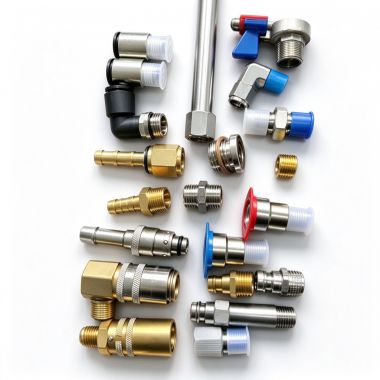


Description: Clamp type sanitary pipe fitting enabling fast assembly disassembly for spray washer process piping, supporting CIP cleaning requirements for food grade equipment.
Sanitary clamp style quick connect couplings serve as pipeline connection components on spray washing equipment for spray headers, branch nozzles, pump suction / discharge ports and tank nozzles. Clamp compressed gasket sealing eliminates threading or welding requirements, permitting fast pipe disassembly assembly for nozzle / pipeline cleaning and CIP (Clean in Place) sanitization, complying with food machinery hygiene specifications and simplifying residue / scale removal and maintenance access.
1. 304 Stainless Steel: Preferred for general purpose conditions, withstands 80 95 °C hot water and mild acid alkali detergents; high cost effectiveness and broad adoption.
2. 316L Stainless Steel: Deployed for chloride ion containing or strong chemical cleaning conditions, superior pitting corrosion resistance versus 304. Matched sealing gaskets: EPDM or food grade silicone rubber, resistant to hot water and detergent exposure.
1. By construction: Sanitary tri clamp quick connect assembly comprising coupling body, clamp and sealing gasket. Variants include straight union, elbow, tee and reducer couplings.
2. Nominal Sizes: DN25, DN40, DN50, DN80, DN100 matching spray pipeline DN specifications.
3. Pressure Ratings: PN6, PN10 for low pressure spray system operating conditions (0.2 0.4 MPa).
1. Joint Leakage: Gasket aging, swelling, hardening or rupture; uneven clamping bolt tightening; debris trapped between gasket and sealing faces resulting in poor surface mating.
2. Sealing Face Corrosion: Hot acid alkali / chloride bearing wash media produce pitting craters on 304 stainless steel sealing surfaces preventing effective gasket compression sealing.
3. Clamp Deformation & Fracture: Over torquing during assembly disassembly, hydraulic shock vibration and repeated thermal cycling produce metal fatigue distortion or clamp fracture.
4. Scale and Residue Encapsulation: Mineral scale and protein deposits build up within tri clamp gaps hampering disassembly assembly and promoting microbial growth violating food hygiene rules.
5. Gasket Chemical Degradation: Incorrect elastomer selection; non resistant rubber materials swell or crack under prolonged detergent immersion.
1. Per Shift Inspection: Visually inspect all quick coupling points for dripping / seepage; verify clamp tightness.
2. Periodic Disassembly Cleaning: During CIP cycles or scheduled maintenance remove clamps and clean protein residues and mineral scale off ferrules and gaskets using soft brushes. Never scratch sealing faces with hard tools.
3. Gasket Inspection Replacement: Inspect rubber gaskets upon every disassembly assembly. Immediately replace gaskets showing hardening, cracking, deformation or swelling; stock only food grade EPDM / silicone spare gaskets.
4. Assembly Discipline: Center gaskets before evenly tightening clamps; avoid unilateral over torquing. Prevent hard object impact damage to coupling sealing faces (scratches create permanent leakage paths).
5. Component Replacement: Replace coupling bodies showing pitting cratering or mechanical deformation; replace twisted / cracked clamps. Maintain on site spare inventory of matching clamps and gaskets.
Sanitary quick connect couplings are critical sanitary pipeline fittings for food spray washing equipment enabling fast pipe disassembly assembly for CIP sanitization and component maintenance. Sealing performance relies on stainless steel bodies plus food grade elastomer gaskets for low pressure service. Routine leak checks, periodic sealing face cleaning and timely aged gasket replacement maintain leak tight piping complying with food hygiene standards and lower maintenance related downtime.

 Contact Us