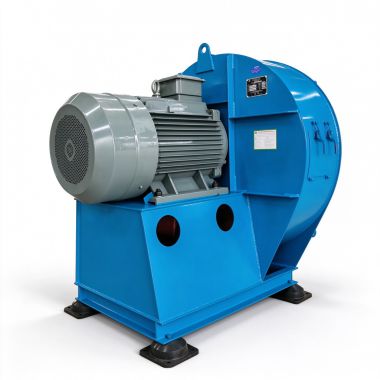


Description: Mechanical equipment for gas pressurization and conveying, with typical outlet gauge pressure ranging from 0.015 MPa to 0.2 MPa. Widely applied in industrial ventilation, wastewater treatment aeration, pneumatic conveying and automotive air conditioning systems.
Principle Blowers increase the kinetic and static pressure energy of gas via mechanical motion to gas delivery.
Basic principle: A motor drives the impeller or rotor to rotate at high speed, drawing in and accelerating air.
Kinetic energy is then converted into pressure energy inside the volute/housing before gas discharges from the outlet.
Regulation method: Modern blowers adopt variable frequency speed control. Air volume and air pressure are adjusted by changing motor rotational speed.
Delivering higher energy efficiency compared with traditional throttling regulation.
Core components: Motor, impeller (rotor), housing, bearings and control system. Some units are fitted with air filters and silencers.
Types Classified by working principle and construction; selection depends on pressure, air volume and site operating conditions.
Roots Blower: Positive displacement blower. Two lobed rotors rotate oppositely inside the cylinder to deliver gas.
Air volume; ideal for water treatment aeration and pneumatic conveying.
Centrifugal Blower: Gas is pressurized by centrifugal force.
Available in single-stage and multi-stage versions with high efficiency; used for blast furnace air supply and chemical gas transportation.magnetic levitation Blower: uses magnetic levitation bearing technology.
Zero mechanical wear, low noise and high energy efficiency; mainstream equipment for wastewater treatment industry.
Small high pressure Blower (Vortex Blower): Delivers pressure severalfold higher than centrifugal blowers. Compact footprint.
For printing, packaging and environmental protection machinery.

 Contact Us