Description: Other names: exhaust filter, oil mist collector, and oil-gas separator; a component used exclusively on oil-lubricated rotary vane pumps.
Function
1. It intercepts the micron-level vacuum pump oil mist in the pump exhaust stream; the oil mist coalesces into liquid oil that returns to the pump oil sump through the oil return hole at the bottom.
Recovering the lubricating oil and oil consumption. It purifies the exhaust so that oil mist is not discharged into the workshop.
Stop environmental pollution and oil contamination of workpieces. It maintains a reasonable exhaust resistance.
Some housings have a built-in safety valve that opens to relieve pressure and shield the pump body when the filter element is clogged and overpressure occurs.
By stop large amounts of oil mist from escaping, it indirectly shield internal parts such as the vanes and bearings.
Materials Filter Element (Filter Body)
1. Multi-layer composite glass fiber: The industrial mainstream a graded filter medium that intercepts 1μm oil mist.
Oil-resistant and able to withstand a certain temperature; it cannot be regenerated by purging and can only be replaced.
Polymer coalescing media combined with glass fiber: A high-end design with coarse and fine filtration layers oil coalescing and return.
Metal sintered mesh/stainless steel woven mesh (304/316L): Resistant to high temperature and chemical gases; mostly used in harsh conditions, at high cost.
Support frame: Galvanized steel plate or stainless steel, stop the filter medium from collapsing under pressure.
Seals: Nitrile rubber (NBR) and fluororubber (FKM) seal the end face of the filter element and stop air from short-circuiting and carrying oil away.
Housing Built-in type: Cast aluminum cavity in the pump body.
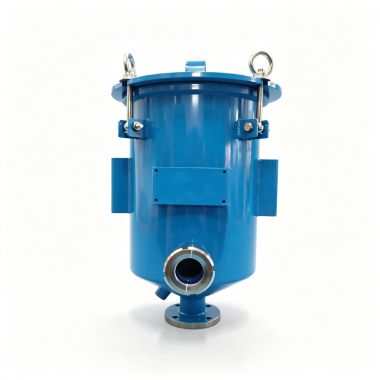
External type: Painted carbon steel or 304 stainless steel housing.
Classification
1. By Installation Type. Built-in oil mist separator: The filter element is fitted directly inside the pump exhaust chamber.
Used on most Busch and Leybold models, and compact in size. External oil mist collector: A separate housing connected to the pump exhaust port by flange or thread.
Chosen for high flow rates and harsh conditions.
By filter medium: glass fiber composite filter element and sintered metal filter element.
By structure: Single-stage separation or a two-stage design with pre-separation (centrifugal labyrinth plus filter element) that first throws out large oil droplets by centrifugal force.
Filter element life. By safety configuration: with a built-in safety valve or without. Problems
1. Filter blockage: Increased exhaust back pressure.
Higher pump temperature excessive motor current and reduced pumping speed and ultimate vacuum. Blue or white smoke from the exhaust.
Oil carryover and abnormally high oil consumption: These indicate that the filter medium is damaged or punctured.
Or that a failed seal is allowing the air to short-circuit.
Oil return failure: The oil return hole at the bottom of the filter element is blocked so the collected oil cannot flow back and is carried out again by the air stream.
Delamination blistering and collapse of the filter medium: Caused by excessive pressure differential high-temperature aging.
And structural failure of the filter element. The safety valve on the housing trips frequently: The filter element is severely clogged.
Causes of Damage or Failure
1. Sludge and impurity blockage (most common): Dust moisture and condensable media are drawn in with the intake air.
Aging oxidation carbonization and emulsification of the pump oil generate gummy sludge that blocks the pores of the filter medium.
So the back pressure keeps rising and eventually crushes the filter element. Overload damage to the filter medium from differential pressure: Clogging from use well beyond the service life makes the exhaust pressure exceed the allowable differential pressure of the element.
Tearing and puncturing the glass fiber layer; this is more likely when the safety valve has failed. Excessive temperature: Prolonged heavy-duty operation raises the exhaust temperature above the temperature limit of the filter medium.
Aging and hardening the rubber seal and destroying the bonding layer of the glass fiber. Blocked oil return hole: Sludge and carbon powder plug the small oil return hole at the bottom.
So the separated oil cannot flow back; the element then fills with oil and causes secondary oil carryover. It looks like element damage, but is actually a failure of the oil return passage.
Selection and assembly problems: A mismatched element a missing or misaligned seal ring or air bypassing the element cause oil carryover and smoke.
And insufficient tightening allows vibration to shift and damage the element. Corrosive attack by the working medium: Drawing in corrosive gases and solvent vapors corrodes the filter medium and rubber seals.
Embrittling the medium and causing the seals to swell and leak. Improper maintenance: Purging a glass fiber element with compressed air damages its fiber pore structure.
Permanently filtration performance and causing early failure again. Points of Operation and Maintenance Normal clean conditions: Replace together with the pump oil every 3,000–5,000 hours.
In harsh conditions with dust and moisture, shorten this to 1,000–2,000 hours; a glass fiber element must not be purged and reused.
Monitor the pressure differential or current to judge blockage; fit an intake filter on the suction side to reduce the load on the oil mist separator.



 Contact Us