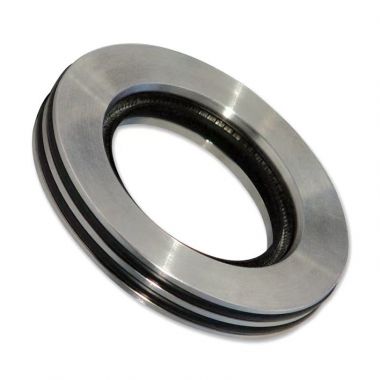


Description: Oil seals are an important component in the shaft sealing system of centrifugal fans.
1. Oil retention and lubrication: Seals the grease or oil inside the bearing housing, preventing lubricant from leaking out along the shaft and ensuring continuous bearing lubrication.
2. Isolation from external impurities: Blocks dust, water vapor, process fumes, and dirt from entering the bearing cavity, avoiding grease contamination and bearing wear and corrosion.
3. Prevention of lubricating oil splash: At high fan speeds it keeps lubricating oil from being thrown out of the bearing housing by centrifugal force, maintaining a stable oil level.
A standard skeleton oil seal consists of three parts, forming an overall ring structure:
1. Metal skeleton: A rigid support frame that keeps the oil seal in shape and firmly pressed into the mounting hole of the bearing housing end cover, preventing the oil seal from deforming, loosening, or falling out.
2. Elastic rubber body: Encases the skeleton and forms the sealing lip; a built-in helical spring tightens the lip so that it always hugs the shaft surface, compensating for wear and runout.
3. Sealing lip: A thin-walled lip that contacts the main shaft directly; the single lip is the basic type, while the double-lip design adds a dust-proof secondary lip, with the outer side for dust protection and the inner side for oil sealing — preferred for dust-laden fan service.
Nitrile rubber, fluororubber, EPDM, silicone rubber

 Contact Us