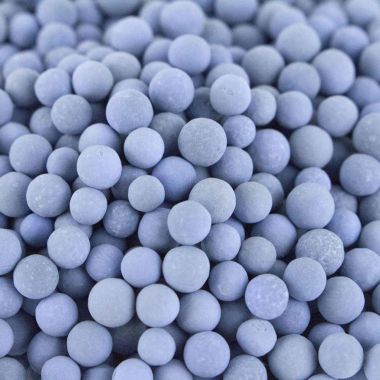


Description: Cobalt-molybdenum catalysts (Co Mo) are the mainstream sulfur-resistant shift/hydrodesulfurization catalysts in industry. The core is the sulfided Co Mo S active phase, which is sulfur-resistant, has a wide temperature range, and high activity, and is widely used in hydrogen production, ammonia synthesis, and hydrorefining in petroleum refining.
1. Chemical Composition (Typical)
Active Components (Oxidation State): MoO₃ 5%–18%, CoO 1%–6%
Carrier: γ‑Al₂O₃ (mainstream), or Al₂O₃‑MgO, Al₂O₃‑ZrO₂
Additives: K₂O (enhances low-temperature activity), MgO, ZrO₂ (anti-sintering / anti-coking)
2. Physical Form
Appearance: Blue-gray spherical (φ3–5 mm) or cylindrical
Bulk Density: 0.6–1.0 g/cm³; Specific Surface Area: 180–250 m²/g; Pore Volume ≥0.4 cm³/g
Mechanical Strength: ≥50 N/cm, wear-resistant, crush-resistant.
1. Strong Sulfur Resistance (Most Prominent)
Must maintain activity in H₂S-containing atmosphere (≥0.1% H₂S); easily deactivates in sulfur-free environments.
Suitable for hydrogen production and ammonia synthesis from high-sulfur feedstocks such as coal / heavy oil / residue oil.
2. Wide Temperature Range Activity
Sulfur-Resistant Conversion: 180–450℃ (Low temperature 180–250℃, High temperature 300–450℃).
Hydrodesulfurization: 260–380℃, conversion ≥95%.
3. High Activity and Selectivity
Catalyzes CO + H₂O → CO₂ + H₂ (sulfur-resistant conversion), deeply reducing CO to ≤0.5%.
Hydrodesulfurization: Converts thiols, sulfides, thiophenes, COS, CS₂ to H₂S, producing high-purity hydrogen.
4. Stability and Lifespan
Anti-sintering, anti-coking, anti-poisoning (except As, Pb); industrial lifespan 3–5 years.
Can be repeatedly sulfided–regenerated (≥10 times), with activity decay < 3.2%.

 Contact Us